Subsidy slots active: PM Surya Ghar rooftop solar quotes available todayCompare MNRE-approved installers before paying advance88008334249958700178subsidysolars@gmail.comALMM-ready equipment, DISCOM approval and net metering help
ALMM List-II: Check Cells Before Final Payment
Solar Guides#types-of-solar-panels#monocrystalline-solar-panel

Types of Solar Panel in India (2026): Monocrystalline, Polycrystalline, Bifacial & TOPCon Explained

भारत में सोलर पैनल के प्रकार (2026): मोनो, पॉली, बाइफेशियल और टॉपकॉन की पूरी जानकारी

Complete guide to types of solar panels in India 2026. Compare monocrystalline, polycrystalline, bifacial, and TOPCon panels on efficiency, price per watt, lifespan, and which is best for your home.
28 Jun 202611 min read
Types of solar panels in India 2026 — monocrystalline, polycrystalline, bifacial and TOPCon comparison guide
Is article mein kya milega11 min read
  • Mono PERC is the right default for most Indian homes in 2026 — price gap with polycrystalline has collapsed while efficiency advantage remains
  • TOPCon is the upgrade worth paying for: 22–24% efficiency and lower degradation make it the best long-term choice for space-constrained rooftops
  • Bifacial panels add 5–15% generation on white flat concrete rooftops — but gain little on dark or tiled surfaces where panels sit close to the roof
  • Always verify your panel model on the MNRE ALMM list before purchase — non-listed panels are ineligible for PM Surya Ghar subsidy

Last verified: 28 Jun 2026 · Data sourced from MNRE & DISCOMs

Types of solar panels in India: which one should you actually buy in 2026?

With rooftop solar installations crossing 6 lakh homes under PM Surya Ghar and panel prices stabilising, there has never been a better time to go solar. But walk into any installer's office and you'll hear a confusing list: mono, poly, PERC, bifacial, TOPCon. What do they mean, and which panel type is actually right for your rooftop?

This guide breaks down every major solar panel type available in India in 2026 — what the technology does, how it performs in Indian conditions, what it costs, and who it is best for.


Quick comparison: all panel types at a glance

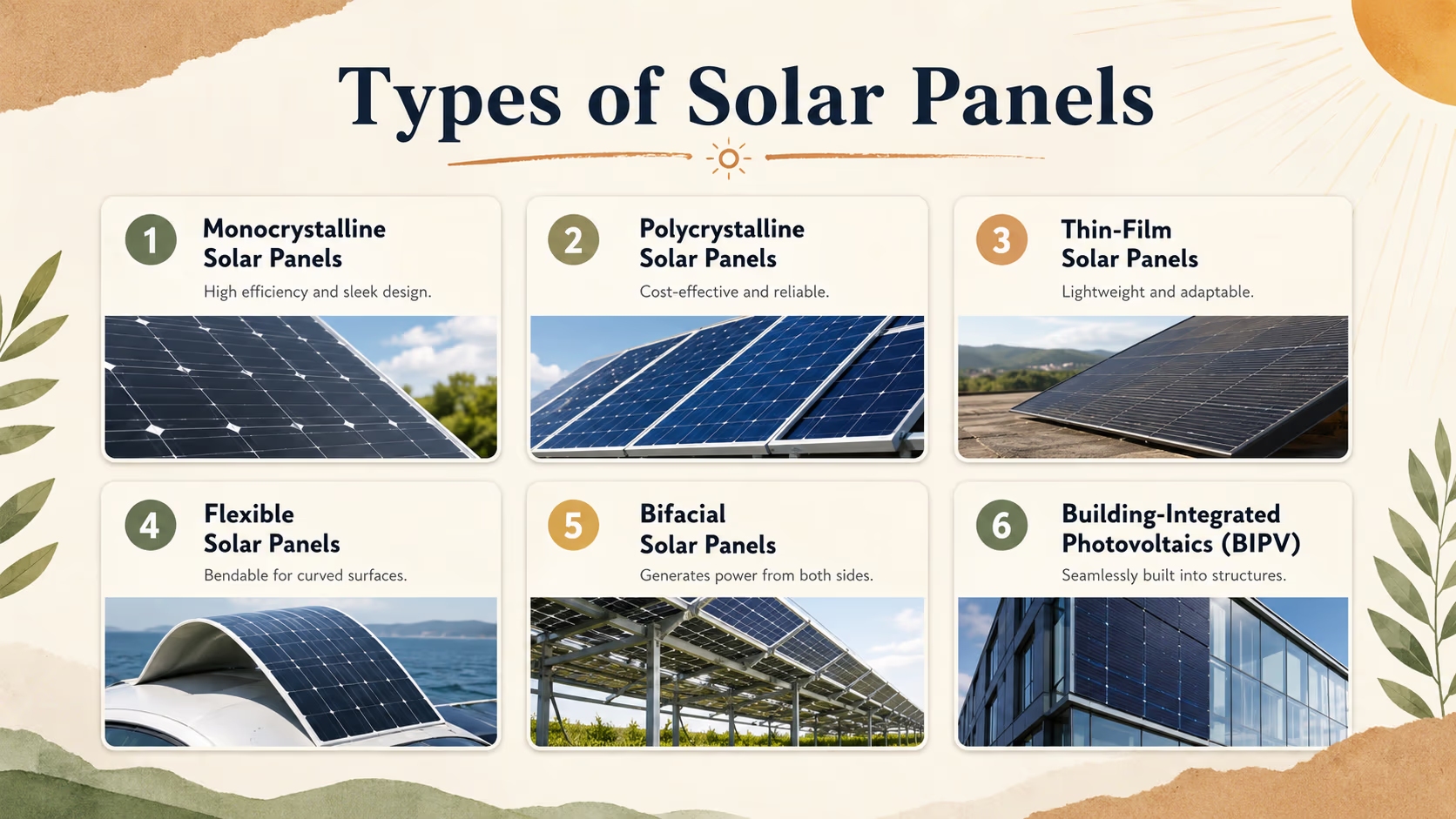
Panel TypeEfficiencyPrice (panel only)LifespanBest For
Monocrystalline PERC19–22%₹22–28/Wp25–30 yrsMost homes
Polycrystalline15–17%₹18–24/Wp20–25 yrsLarge roof, tight budget
Bifacial (Mono/TOPCon)20–24% + 5–15% rear₹32–40/Wp25–30 yrsWhite flat rooftops, commercial
TOPCon22–24%₹20–28/Wp25–30 yrsFuture-ready, premium homes
Thin Film10–13%₹22–26/Wp15–20 yrsIndustrial, non-standard surfaces
HJT23–25%₹32–45/Wp30+ yrsMaximum efficiency, niche use

1. Monocrystalline solar panels (Mono PERC) — the standard for Indian homes

Monocrystalline panels are made from a single, pure silicon crystal grown using the Czochralski process. The silicon is shaped into a cylindrical ingot, sliced into thin wafers, and assembled into panels. Their uniform dark black or blue colour comes from this single-crystal structure.

PERC (Passivated Emitter and Rear Cell) is the current production standard for monocrystalline panels. A special passivation layer on the rear of the cell reflects light that would otherwise pass through, giving the panel a second chance to absorb it. The result is 2–3% extra efficiency over older mono cells.

Monocrystalline PERC: key specs

  • Efficiency: 19–22%
  • Price in India (2026): ₹22–28 per Wp (panel only, GST included)
  • Temperature coefficient: –0.35 to –0.38%/°C (handles Indian heat better than poly)
  • Degradation: 0.3–0.5% per year; retains 88–92% output at 25 years
  • Lifespan: 25–30 years with standard performance warranty
  • Appearance: Sleek black, octagonal cells with rounded corners

Why mono PERC is the right default in 2026

The price gap between monocrystalline and polycrystalline has effectively disappeared in India. Most MNRE-empanelled installers now supply mono PERC as standard. For city rooftops with limited space, higher efficiency per square metre means fewer panels for the same kilowatt output. Brands like Waaree, Adani Solar, Vikram Solar, and Tata Power Solar all offer ALMM-listed mono PERC modules in the 400–550 Wp range.

Who should buy mono PERC: Almost every residential buyer in 2026. It is the right default choice unless you have a specific reason to upgrade to TOPCon or bifacial.


2. Polycrystalline solar panels — still relevant?

Polycrystalline (also called multicrystalline) panels are made by melting multiple silicon fragments together and pouring the mixture into square moulds. The manufacturing process is simpler, which historically made them cheaper. Their distinctive speckled blue appearance comes from the multiple crystal boundaries inside each cell.

Polycrystalline: key specs

  • Efficiency: 15–17%
  • Price in India (2026): ₹18–24 per Wp
  • Temperature coefficient: –0.40 to –0.45%/°C (loses more output in peak Indian summer heat)
  • Degradation: 0.5–0.7% per year
  • Lifespan: 20–25 years

The honest assessment for 2026

Polycrystalline dominated Indian rooftop solar through the early 2020s because of its lower price. That cost advantage has shrunk considerably. For the same kilowatt system, a polycrystalline installation now requires more panels, more mounting hardware, and more roof space — and the panels degrade faster in Indian heat.

Free resource

Apne city ka solar potential dekho

Real prices, real savings. 2 minute form — koi commitment nahi.

Free Quote Pao →
FreeNo spamWhatsApp response

For most homeowners: the slightly lower per-watt price does not justify lower efficiency and a shorter warranty life.

Who should still consider poly: Homeowners with abundant rooftop space (say, a large flat industrial shed) and a very tight upfront budget who cannot access a loan or the PM Surya Ghar subsidy benefit quickly.


3. Bifacial solar panels — double the sunlight capture

Bifacial panels generate electricity from both the front and the rear surface. The rear captures reflected light (called albedo) from the surface beneath the panel. They are typically built on monocrystalline PERC or TOPCon cells with glass on both sides instead of a standard backsheet.

Bifacial: key specs

  • Front efficiency: 20–23%
  • Additional rear gain: 5–15% depending on surface reflectivity beneath the panel
  • Price in India (2026): ₹32–40 per Wp
  • Best mounting: Elevated racking (at least 30–40 cm above roof surface) to allow light to reach the rear

When bifacial genuinely pays off in India

Bifacial panels work well on white-painted flat concrete rooftops — very common in Delhi, UP, and Haryana homes. The white surface reflects enough diffuse light to the rear cells to produce meaningful additional generation.

On dark or tiled rooftops where panels sit close to the surface, the rear gain is minimal and the premium over mono PERC is hard to justify for a homeowner.

Bifacial is increasingly popular for commercial and industrial rooftops, solar carports, and ground-mounted systems where albedo conditions can be controlled.

Who should consider bifacial: Homeowners with white flat rooftops, elevated mounting structures, or commercial buyers with large systems where even a 5–10% generation gain has a meaningful rupee value.


4. TOPCon panels — the next standard arriving now

TOPCon (Tunnel Oxide Passivated Contact) is a newer cell architecture that adds an ultra-thin tunnel oxide layer and a polysilicon layer between the silicon wafer and the contact. This dramatically reduces recombination loss — the energy wasted when electrons combine before reaching the circuit.

TOPCon: key specs

  • Efficiency: 22–24%
  • Price in India (2026): ₹20–28 per Wp (narrowing gap with PERC as production scales)
  • Temperature coefficient: –0.30 to –0.35%/°C (slightly better than PERC in Indian heat)
  • Degradation: 0.3–0.4% per year (lower than PERC)
  • Lifespan: 25–30 years

TOPCon in India right now

Waaree launched TOPCon modules in 2025–26. Longi, Jinko Solar, and Adani have all introduced TOPCon products in the Indian market. The efficiency advantage over standard PERC is real but the price premium has been shrinking rapidly as manufacturing volumes increase.

For residential buyers in 2026: TOPCon is worth paying a small premium for if your installer can source it from a brand with credible warranty support. In 2–3 years, TOPCon is likely to replace PERC as the new default standard.

Who should buy TOPCon: Buyers who want maximum long-term performance, have a smaller rooftop, or want a system that will still be highly efficient 20 years from now.


5. Thin film solar panels — niche use only

Thin film panels are made by depositing photovoltaic material (cadmium telluride, amorphous silicon, or CIGS) as thin layers onto glass or flexible surfaces. They are lightweight and bendable.

Efficiency is 10–13% — significantly lower than any crystalline silicon option. This means thin film needs 60–80% more roof area to produce the same output as a mono PERC system. Lifespan is typically 15–20 years with shorter warranties.

Thin film is not suitable for typical Indian residential or commercial rooftops. It is used for specific industrial applications, curved or non-standard surfaces, and building-integrated photovoltaics (BIPV).

Who should consider thin film: Industrial or architectural projects with specific structural constraints that rule out standard framed panels.


6. HJT panels — highest efficiency, highest cost

HJT (Heterojunction Technology) combines crystalline silicon wafers with amorphous silicon layers to create a hybrid structure. This gives HJT the highest efficiency of any commercially available solar panel — 23–25% — and very low temperature coefficient (–0.24 to –0.26%/°C), meaning excellent performance even in peak Indian summer heat.

Price is ₹32–45 per Wp, making HJT 50–80% more expensive than PERC. Few Indian manufacturers produce it yet. REC and Panasonic are key global players.

Who should consider HJT: Premium installations with very severe roof space constraints, or buyers who want maximum possible system output regardless of cost.


How long do solar panels actually last in India?

The lifespan question is one every homeowner asks. Here is what the data shows:

Quality mono PERC and TOPCon panels (BIS IS 14286 / IEC 61215 certified) degrade at 0.3–0.5% per year. At 25 years, a panel retains 88–92% of its original output. A 3 kW system generating 400 units per month when new will still generate around 360 units per month at 25 years.

Next step

Ab ready ho? Top installers se connect karo

30 second form. Zero commitment. Verified installers 2 ghante mein WhatsApp karein.

Free consultationNo obligationMNRE verified only2hr WhatsApp response

India's climate adds some stress: panel surface temperatures routinely reach 65–80°C in summer, and UV exposure accelerates encapsulant yellowing over decades. This is why IEC-certified panels with UV-stabilised encapsulants and tempered anti-reflective glass matter more in India than in temperate climates.

Performance warranties from quality brands guarantee at least 80% output at year 25. Most panels continue producing beyond 25 years at 85–90% of original output.


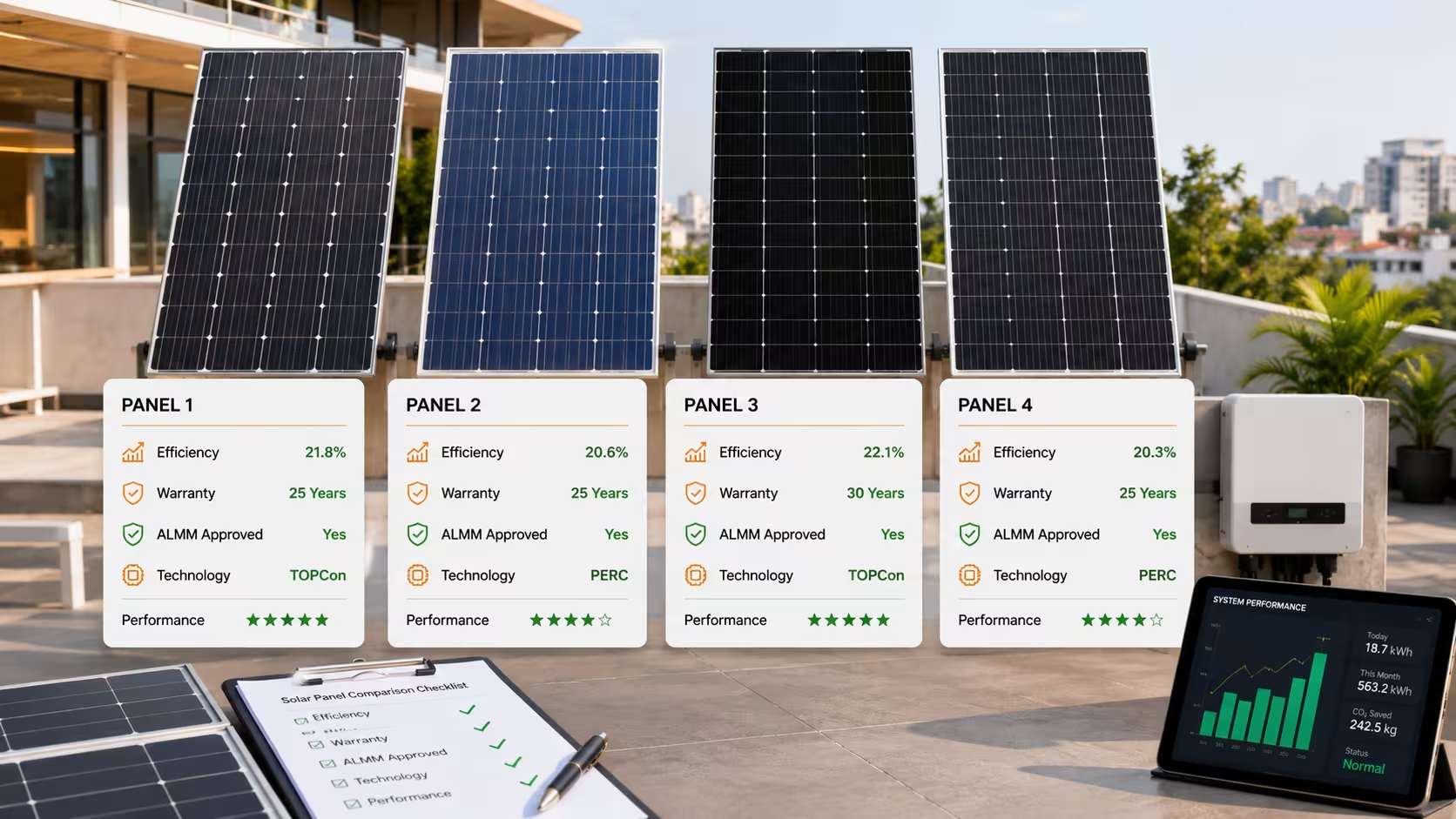
Which panel is ALMM-listed? (Important for PM Surya Ghar subsidy)

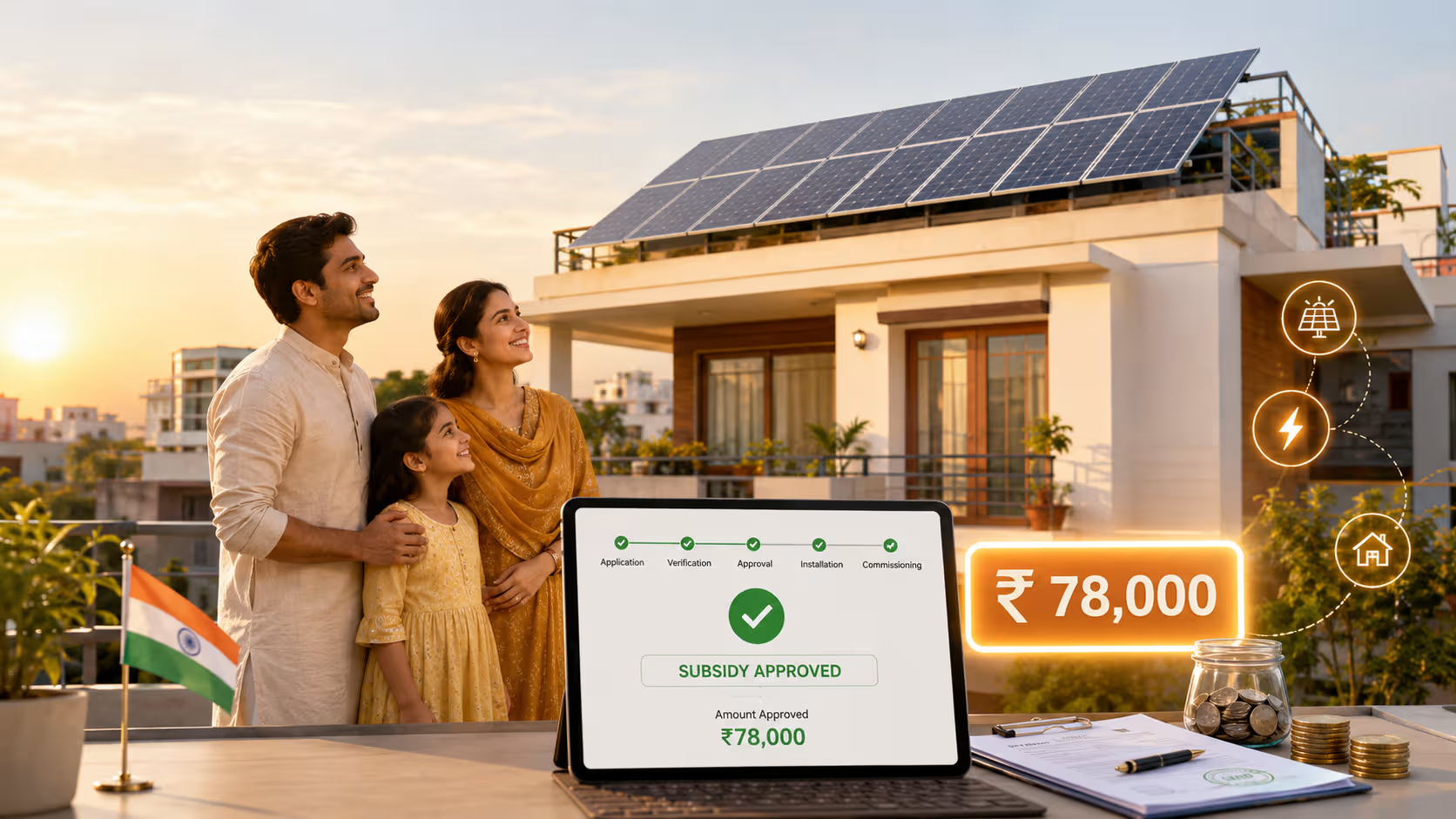
To claim the PM Surya Ghar Muft Bijli Yojana subsidy (up to ₹78,000 for systems 3 kW and above), your panels must be on the ALMM (Approved List of Models and Manufacturers) maintained by MNRE. Most mono PERC and TOPCon panels from major Indian and Tier-1 international brands are ALMM-listed.

Always verify the specific model number on the MNRE ALMM portal before purchase. A panel not on the list makes you ineligible for subsidy — regardless of how good the deal sounds.


Choosing the right solar panel for your situation

Small city rooftop (under 80 sq m available): Mono PERC or TOPCon. Higher efficiency means fewer panels for your kilowatt requirement.

Large rural or industrial rooftop with tight budget: Polycrystalline is still a functional option. You'll need more panels but upfront cost is lower.

White flat concrete rooftop in Delhi/NCR/UP/Haryana: Consider bifacial panels with elevated mounting. Rear gain on white concrete is meaningful.

Commercial or industrial system above 10 kW: Bifacial TOPCon gives best ROI over the system life. The generation gain pays back the premium faster at commercial scale.

Future-proof priority: TOPCon is the answer. Lower degradation and higher efficiency mean better returns over a 25-year system life.


A note on panel brands to look for in 2026

For Indian residential and commercial buyers, ALMM-listed panels from these brands have documented track records:

  • Indian manufacturers: Waaree Energies, Adani Solar, Vikram Solar, Tata Power Solar, Saatvik Solar
  • International Tier-1: Longi Solar, Jinko Solar, Trina Solar, Canadian Solar

Always ask your installer for the exact model number and verify it on the ALMM portal before signing anything.


FAQ

Which type of solar panel is best for home in India?

For most Indian homes in 2026, monocrystalline PERC is the best balance of efficiency, cost, and warranty. TOPCon is a strong upgrade if your budget allows.

What is the average lifespan of solar panels?

Quality panels last 25–30 years. Degradation is 0.3–0.5% per year for mono PERC and TOPCon, meaning they retain 88–92% output at 25 years.

Are polycrystalline panels still worth buying in 2026?

Rarely. The price advantage over mono PERC has shrunk, while efficiency and heat performance remain inferior. Only consider poly if you have abundant roof space and a very tight budget.

What is the difference between bifacial and normal solar panels?

Bifacial panels generate electricity from both front and rear surfaces. The rear captures reflected light from the surface below, adding 5–15% more generation in ideal conditions (white flat rooftops with elevated mounting).

What is a TOPCon solar panel?

TOPCon is a next-generation cell technology with 22–24% efficiency and lower degradation than standard PERC. It is available from Waaree, Longi, Jinko, and Adani in India and costs 10–20% more than standard mono PERC.

How many types of solar panels are there?

The main types available in India are monocrystalline PERC, polycrystalline, bifacial, TOPCon, thin film, and HJT. For residential use, monocrystalline PERC and TOPCon are the most relevant.

Free Solar Quote Pao

Quick callback form

No spam. WhatsApp par response milega.

Related Guides

All guides

Koi sawaal hai?

Hamare solar experts 2 ghante mein jawab denge. Free consultation.

WhatsApp karo — free