Subsidy slots active: PM Surya Ghar rooftop solar quotes available todayCompare MNRE-approved installers before paying advance88008334249958700178subsidysolars@gmail.comALMM-ready equipment, DISCOM approval and net metering help
ALMM List-II: Check Cells Before Final Payment
Cost & Pricing#solar panel installation cost#solar panel installation

Solar Panel Installation Cost in India 2026: Price, Process & Subsidy Guide

भारत में सोलर पैनल इंस्टॉलेशन लागत 2026: कीमत, प्रक्रिया और सब्सिडी गाइड

Solar panel installation costs ₹45,000–₹75,000 per kW in India in 2026. Compare 1 kW, 3 kW and 5 kW prices, subsidy, process, payback and installer checks.
14 Jul 20269 min read
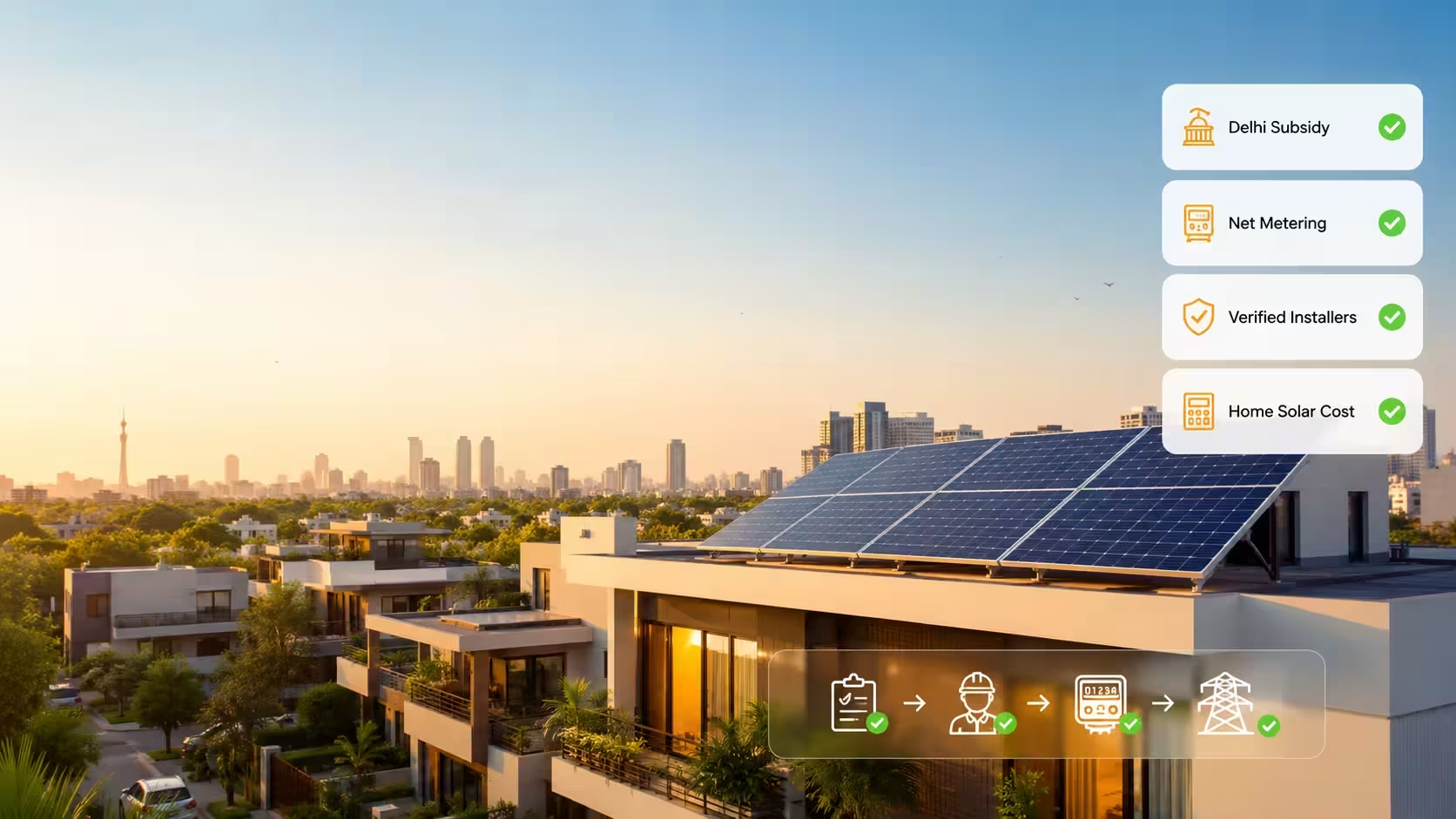
Solar panel installation cost in India 2026 with system prices, subsidy and rooftop installation process
Is article mein kya milega9 min read
  • Residential solar installation in India generally costs ₹45,000–₹75,000 per kW before subsidy, with a typical 3 kW system costing ₹1.65–₹2.25 lakh
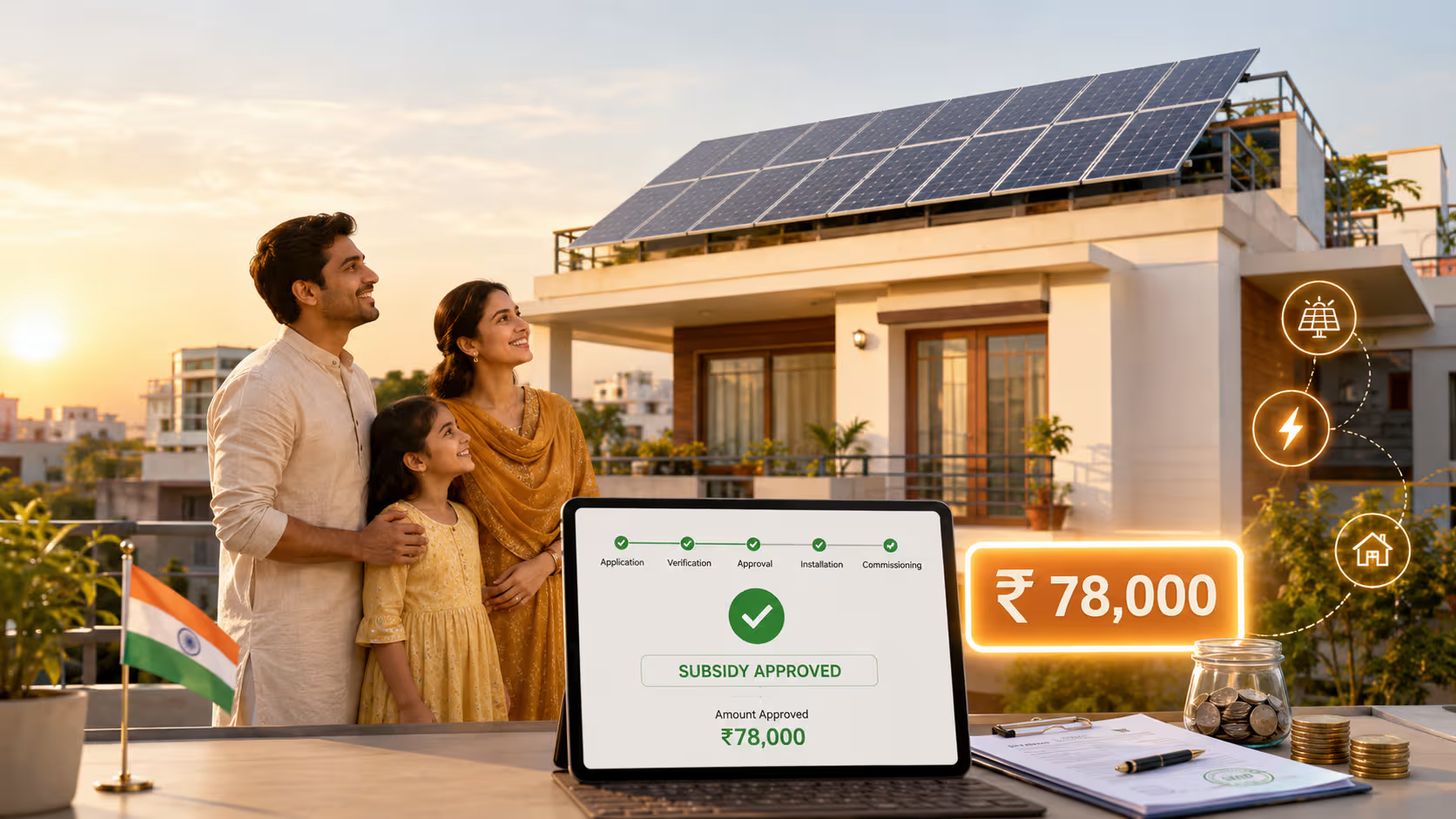
  • PM Surya Ghar provides ₹30,000 per kW for the first 2 kW and ₹18,000 for the third kW, capped at ₹78,000
  • Use an approved vendor, verify the exact module model's ALMM eligibility, and allow about 6–12 weeks for the complete process

Last verified: 14 Jul 2026 · Data sourced from MNRE & DISCOMs

Solar panel installation cost in India: quick answer

Residential grid-connected solar installation in India generally costs ₹45,000–₹75,000 per kW before subsidy. A typical 3 kW system costs about ₹1.65–₹2.25 lakh before subsidy and ₹87,000–₹1.47 lakh after the maximum ₹78,000 central subsidy. Depending on your electricity use and final system cost, the usual payback period is about 3–6 years.

Key takeaways

  • Residential solar generally costs ₹45,000–₹75,000 per kW before subsidy
  • A 3 kW system typically costs ₹1.65–₹2.25 lakh before subsidy
  • The central subsidy is ₹30,000 per kW for the first 2 kW plus ₹18,000 for the third kW, capped at ₹78,000
  • The complete approval, installation and subsidy process usually takes 6–12 weeks
  • Using a vendor who is not approved on the official portal can make the system ineligible for subsidy

Solar installation price by system size

System sizeCost before subsidyCentral subsidyEstimated net cost
1 kW₹65,000–₹95,000₹30,000₹35,000–₹65,000
3 kW₹1.65–₹2.25 lakh₹78,000 maximum₹87,000–₹1.47 lakh
5 kW₹2.80–₹3.60 lakh₹78,000 maximum₹2.02–₹2.82 lakh

Actual prices depend on the city, roof condition, panel and inverter brand, mounting structure, cable quality and installer scope.

What makes up the per-kW price?

A typical quotation can be divided approximately as follows:

  • Solar panels: 50–55%
  • Inverter: 10–15%
  • Mounting structure: about 10%
  • Cables, earthing and other balance-of-system items: about 10%
  • Labour and commissioning: 10–15%

A quote far below competing offers may use lighter mounting steel, lower-grade cables or modules that do not meet the required ALMM conditions. Compare the exact bill of materials, not only the headline price.

Panel technology and price

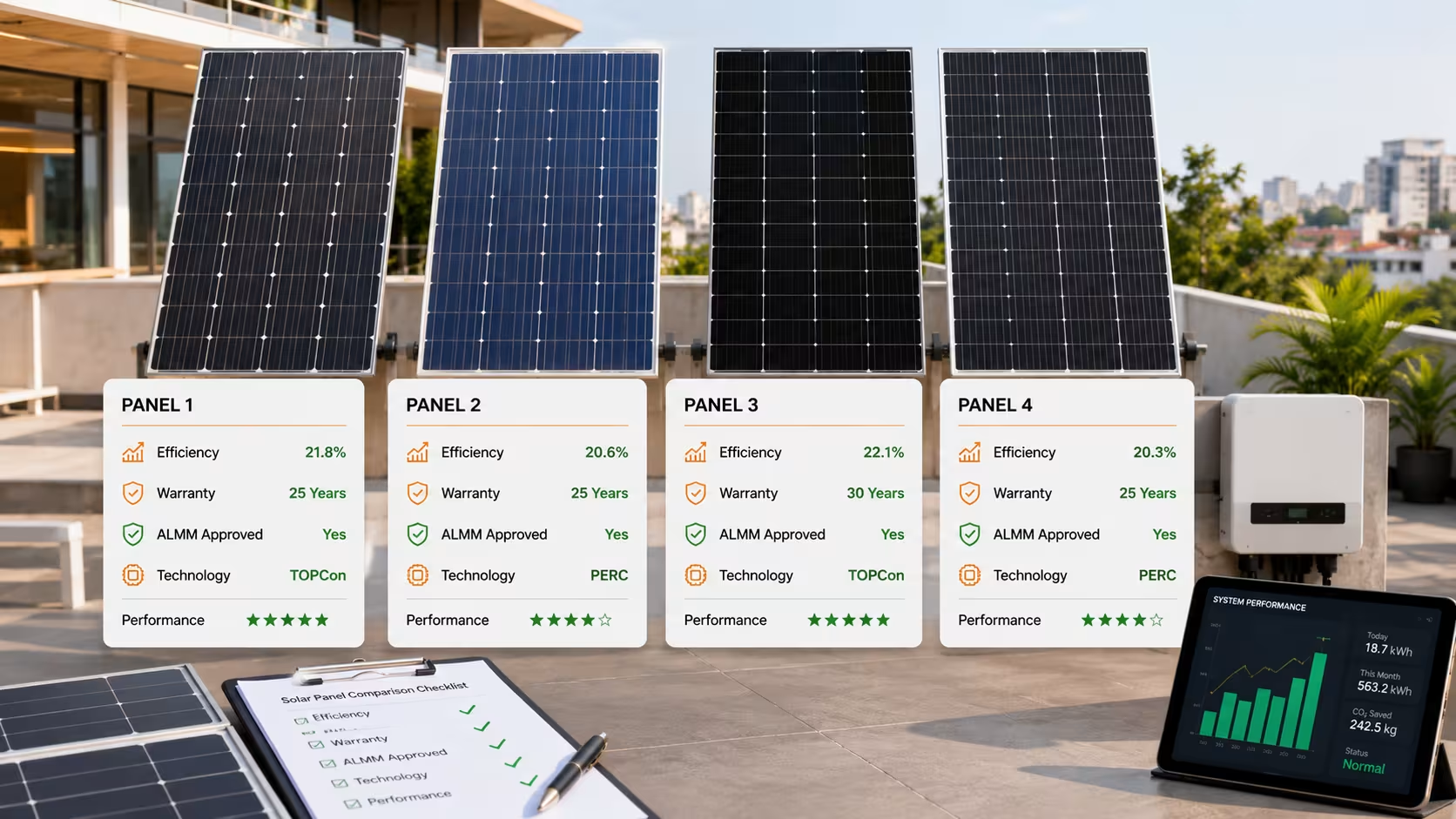
Mono PERC remains a cost-effective choice, commonly quoted around ₹22–₹28 per watt for modules. N-type TOPCon modules, often around ₹28–₹36 per watt with higher efficiency, are increasingly preferred where roof space is limited. Polycrystalline panels are now largely outdated for new residential systems.

Commercial and industrial systems may cost around ₹35,000–₹50,000 per kW because of their scale, but they are not eligible for the residential PM Surya Ghar subsidy. Businesses may instead benefit from applicable depreciation provisions.

PM Surya Ghar subsidy explained

PM Surya Ghar Muft Bijli Yojana provides central financial assistance for eligible residential rooftop systems:

  • First 2 kW: ₹30,000 per kW
  • Third kW: an additional ₹18,000
  • 3 kW and above: ₹78,000 maximum central subsidy

The subsidy is transferred to the applicant's bank account after installation, commissioning and DISCOM approval. Processing time varies, so homeowners should not treat any quoted credit date as guaranteed. Some states may offer additional support; verify the current benefit with the state agency or DISCOM.

Eligibility and documents

Applicants generally need to be Indian residential electricity consumers with a suitable rooftop and an electricity connection in the applicant's name. The installation must follow the official portal process and use eligible equipment and an approved vendor.

Free resource

Apne city ka solar potential dekho

Real prices, real savings. 2 minute form — koi commitment nahi.

Free Quote Pao →
FreeNo spamWhatsApp response

Commonly required documents include:

  • Aadhaar card
  • Latest electricity bill and consumer number
  • Bank account details for subsidy transfer
  • Property ownership or rooftop permission proof, where required
  • PAN card and photograph, if requested

How to apply for the subsidy

  1. Register at pmsuryaghar.gov.in using your state, DISCOM and consumer details.
  2. Apply for rooftop solar and wait for technical feasibility approval.
  3. Select an approved vendor through the official process.
  4. Finalize the system design and verify the proposed module's current ALMM eligibility.
  5. Complete installation and submit the required commissioning documents.
  6. Have the system inspected and the net meter installed by the DISCOM.
  7. Submit bank details and claim the subsidy after commissioning approval.

Installation process and timeline

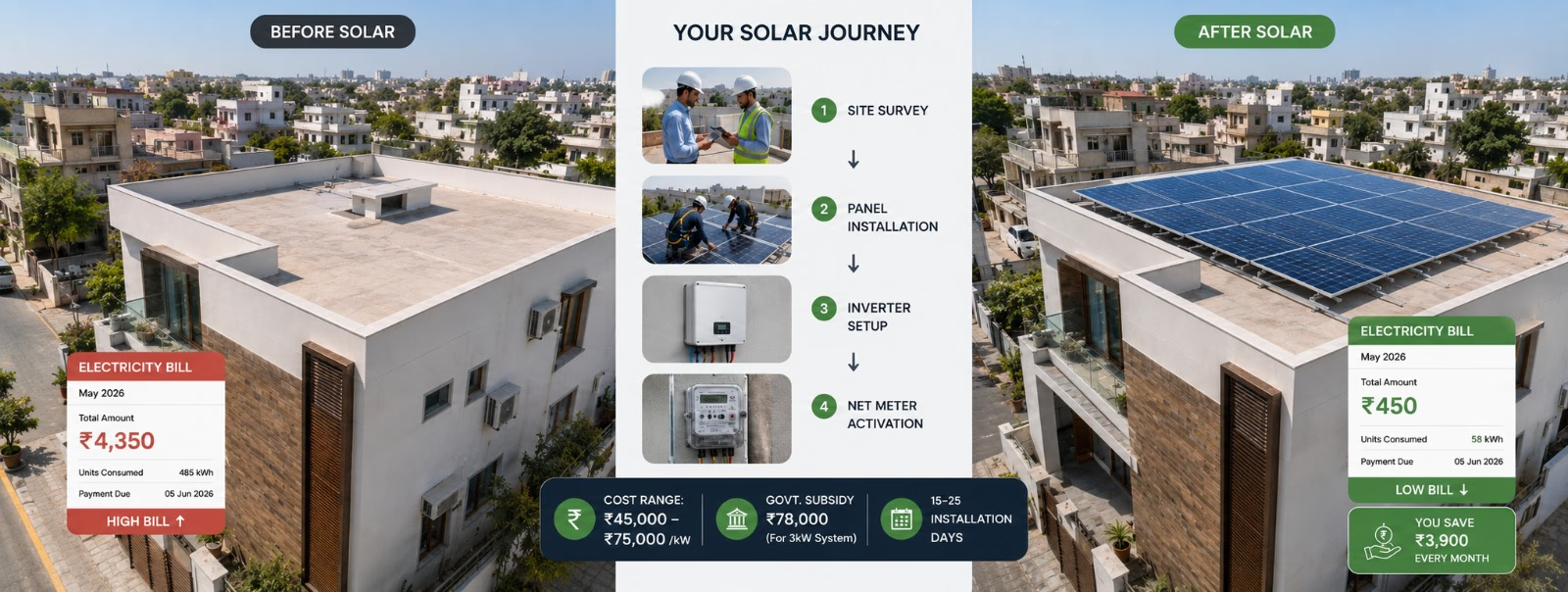
A normal project includes site survey, system design, feasibility approval, vendor selection, equipment procurement, mounting structure installation, panel and inverter wiring, DISCOM inspection, net-meter installation and commissioning. Physical installation often takes 1–3 days, but approvals and inspections make the realistic end-to-end timeline approximately 6–12 weeks.

How to choose the right system size

Size the system using annual electricity consumption, sanctioned load, usable shadow-free roof area and the state's net-metering rules. A rough starting point is:

Average monthly billIndicative system size
Around ₹1,5001–1.5 kW
₹3,000–₹5,0003–5 kW
Above ₹8,0008 kW or more

A 3 kW system typically needs around 250–350 square feet of shadow-free roof. Avoid oversizing only to fill the roof: exported electricity may receive a lower value than electricity consumed directly in the home.

Standard on-grid systems shut down during a power cut for safety. Homeowners who require backup need a hybrid inverter and battery, which increases cost and is generally outside the rooftop subsidy calculation.

Choosing a reliable solar installer

Verify the vendor's current approval status on the official portal, the exact module model's ALMM status, relevant BIS/IEC certifications, and written warranty coverage. Obtain at least three itemized quotations with comparable specifications.

Important warranties include:

  • Panel performance warranty, commonly 25 years
  • Panel product warranty
  • Inverter warranty, commonly 5–10 years
  • Installer workmanship warranty, commonly 1–5 years

Warning signs include pressure to pay the full amount early, refusal to name the exact panel model, failure to show ALMM eligibility, or an unexplained price far below the market.

Roof type and structural checks

RCC or flat roofs generally use tilted frames anchored or ballasted according to the structural design. Sloped or sheet roofs commonly use rail-and-clamp mounting that follows the roof profile. A qualified installer should check load-bearing capacity, waterproofing, wind loading and safe maintenance access before installation.

Solar installation in Delhi

Delhi consumers are served by BSES Rajdhani, BSES Yamuna and TPDDL, each with its own feasibility and inspection workflow. Delhi receives roughly 5–5.5 peak-sun hours on many days, although seasonal output varies. Net metering is regulated by DERC, and any additional state incentive or generation-based benefit should be confirmed with the relevant DISCOM at the time of application.

Dust makes routine cleaning important in Delhi. A well-sized 3 kW system is often suitable for a 2–3 BHK household, but actual consumption should decide the capacity.

Net metering and maintenance

Net metering records electricity imported from and exported to the grid. Solar generation first serves household loads; unused generation is exported and adjusted under the applicable state rules. Annual surplus may be settled at a separate rate, which is why accurate sizing is more valuable than simply installing the largest possible array.

Solar systems require limited maintenance. Clean panels every few weeks in dusty locations, visually inspect cables and mounting hardware, and arrange a professional electrical and structural inspection annually. A paid cleaning service may cost up to about ₹2,000 per year. Plan for the possibility of replacing the inverter once during the panels' 25-year operating life.

Payback and solar loans

With subsidy, many well-sized residential systems recover their net cost in about 3–6 years. A 3 kW system serving a home with an electricity bill near ₹4,000 per month may approach the shorter end of that range, depending on generation, tariffs, self-consumption and financing cost.

Next step

Ab ready ho? Top installers se connect karo

30 second form. Zero commitment. Verified installers 2 ghante mein WhatsApp karein.

Free consultationNo obligationMNRE verified only2hr WhatsApp response

Eligible applicants can explore collateral-free loans linked to PM Surya Ghar through participating banks and the Jan Samarth portal. Rates and loan limits change, so compare the current annual percentage rate, fees, tenure and prepayment terms before borrowing.

Advantages and disadvantages

Advantages include potentially reducing electricity bills by 70–90%, receiving support toward the upfront cost, long module warranties and lowering dependence on grid electricity.

Disadvantages include the remaining upfront investment, no backup from a standard on-grid system during outages, dependence on roof orientation and shading, and possible delays in approvals, inspection or subsidy transfer.

Common mistakes to avoid

  • Hiring an ineligible vendor to save money and losing the subsidy
  • Choosing system size from roof area instead of electricity consumption
  • Paying the full amount before required approvals and milestones
  • Entering incorrect consumer or bank details
  • Missing a scheduled DISCOM inspection
  • Failing to verify the exact module model's current ALMM status

FAQ

How much does solar panel installation cost in India in 2026?

Residential installation generally costs ₹45,000–₹75,000 per kW before subsidy. A typical 3 kW system costs ₹1.65–₹2.25 lakh before subsidy.

How much subsidy will I get?

The central subsidy is ₹30,000 per kW for the first 2 kW plus ₹18,000 for the third kW, capped at ₹78,000 for systems of 3 kW or larger.

How long does the complete process take?

Physical installation commonly takes 1–3 days, while the full process including approvals, inspection and subsidy processing generally takes 6–12 weeks.

Do solar panels work during a power outage?

Standard on-grid systems shut down during an outage for safety. Backup requires a hybrid system with battery storage.

Can I install subsidized solar on a rented house?

The applicant normally needs control of the rooftop and the electricity connection. Tenants should verify current rules and obtain the owner's written permission; apartment residents may also explore a shared system through their RWA.

What is ALMM and why does it matter?

ALMM is MNRE's Approved List of Models and Manufacturers. Subsidy eligibility depends on the applicable rules and the exact equipment model, so verify it before installation.

Can I get a loan for solar installation?

Yes. Participating banks offer solar loans through the PM Surya Ghar and Jan Samarth process. Check current rates, limits and eligibility before applying.

How much can solar reduce my electricity bill?

A correctly sized system may reduce grid electricity charges by 70–90%, depending on consumption patterns, generation, tariffs and fixed charges.

Which is better: monocrystalline or polycrystalline?

Monocrystalline panels are generally the preferred choice for new rooftop projects because of their higher efficiency and the narrowing price difference.

What is the lifespan of a solar panel?

Quality modules commonly operate for 25–30 years and typically include a long-term linear performance warranty.

Do panels work during monsoon or cloudy weather?

Yes, but output is lower because available sunlight is reduced. Seasonal generation changes are normal.

Do solar panels increase home resale value?

A paid-off, properly commissioned system can be attractive to buyers because it reduces ongoing electricity costs, although India has no standard percentage for the value increase.

Free Solar Quote Pao

Quick callback form

No spam. WhatsApp par response milega.

Related Guides

All guides

Koi sawaal hai?

Hamare solar experts 2 ghante mein jawab denge. Free consultation.

WhatsApp karo — free