Subsidy slots active: PM Surya Ghar rooftop solar quotes available todayCompare MNRE-approved installers before paying advance88008334249958700178subsidysolars@gmail.comALMM-ready equipment, DISCOM approval and net metering help
ALMM List-II: Check Cells Before Final Payment
Solar Panels#best solar panel for home#best solar panels for home in India

Best Solar Panel for Home in India: Complete Buying Guide

भारत में घर के लिए सबसे अच्छा सोलर पैनल: संपूर्ण खरीद गाइड

Find the best solar panel for your home. Compare monocrystalline, polycrystalline and TOPCon panels by efficiency, cost, lifespan and performance in Indian weather.
7 Aug 20268 min read
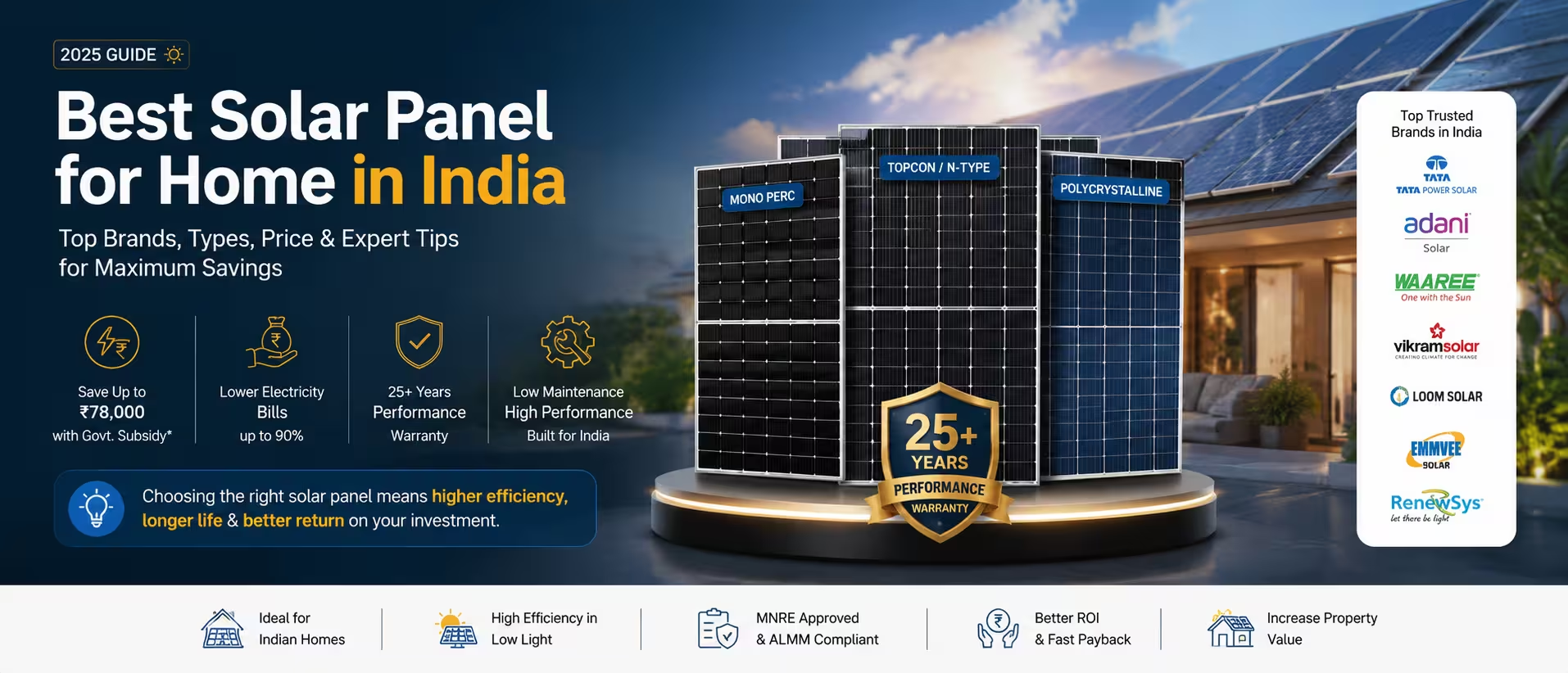
Best solar panel for home in India comparing monocrystalline, polycrystalline, and TOPCon solar panels
Is article mein kya milega8 min read
  • Monocrystalline panels (19–22% efficiency) offer the best all-round balance of cost, output and heat tolerance for most Indian homes
  • TOPCon panels deliver the highest efficiency (22%+) and best heat performance, making them ideal for homes with limited roof space
  • Match system size to your actual electricity consumption, not just roof area, and always verify the exact panel model's certification and warranty terms

Last verified: 7 Aug 2026 · Data sourced from MNRE & DISCOMs

Why choosing the right solar panel matters

Selecting the best solar panel for home use is not just about the lowest price tag — it directly affects how much electricity your rooftop system generates, how long it lasts, and how quickly it pays for itself. Residential solar panels installed today are expected to perform reliably for 25 years or more, so a wrong choice at the buying stage can mean decades of reduced output, more frequent maintenance and lower savings on your electricity bill.

With multiple solar panel technologies now available for homes, understanding the differences between them — and matching that choice to your roof, budget and local climate — is the single most important decision in any rooftop solar project.

Types of solar panels for homes

Most residential solar installations in India use one of three panel technologies: monocrystalline, polycrystalline, or the newer TOPCon (Tunnel Oxide Passivated Contact) modules. Each solar panel type differs in efficiency, cost, appearance and long-term performance.

Monocrystalline solar panels

Monocrystalline solar panels are made from a single continuous silicon crystal, which gives them a uniform black appearance and the highest efficiency among mainstream panel types — typically in the 19–22% range. Because they generate more power per square foot, monocrystalline panels are the preferred choice for homes with limited roof space. They also tend to perform better in low-light and high-temperature conditions compared to older panel types, and generally carry longer performance warranties.

Polycrystalline solar panels

Polycrystalline solar panels are made by melting multiple silicon fragments together, which is a slightly less refined manufacturing process. This results in a lower efficiency range of roughly 15–17% and a distinctive bluish, speckled appearance. Polycrystalline panels are usually less expensive upfront, but they need more roof area to generate the same output as monocrystalline or TOPCon panels. For new residential installations, this technology is increasingly considered outdated as prices for higher-efficiency panels have fallen.

TOPCon solar panels

TOPCon solar panels are an advanced n-type monocrystalline technology that adds a thin passivation layer to reduce electron loss at the cell surface. This pushes efficiency higher — often 22–23% or more — while also improving performance in high heat and reducing long-term degradation. TOPCon panels are increasingly popular for homes that want maximum output from a small roof area, though they typically cost more per watt than standard mono PERC panels.

Monocrystalline vs polycrystalline vs TOPCon: comparison

FactorMonocrystallinePolycrystallineTOPCon
Efficiency19–22%15–17%22–23%+
AppearanceUniform blackBluish, speckledUniform black
Space required (per kW)ModerateHigherLowest
Heat toleranceGoodAverageBest
Typical costModerate–HighLowerHighest
Best suited forMost homesBudget, large roofsSmall roofs, high output needs

For the majority of homeowners, monocrystalline panels offer the best balance of efficiency, cost and durability. Homes with very limited roof space may find the higher upfront cost of TOPCon panels worthwhile, while polycrystalline panels are now mainly relevant where roof area is abundant and budget is the primary constraint.

Which solar panel is best for Indian weather?

Free resource

Apne city ka solar potential dekho

Real prices, real savings. 2 minute form — koi commitment nahi.

Free Quote Pao →
FreeNo spamWhatsApp response

India's climate — long hours of intense sunlight, high summer temperatures and dust accumulation in many regions — affects how different solar panel technologies perform.

All solar panels lose some efficiency as temperature rises, a property known as the temperature coefficient. Panels with a lower (better) temperature coefficient, such as monocrystalline and TOPCon modules, retain more of their rated output during peak Indian summer heat compared to polycrystalline panels. In dusty or high-pollution areas, panel design and ease of cleaning also matter, since accumulated dust can reduce output significantly if panels aren't cleaned regularly.

For most Indian homes, especially in hot regions, monocrystalline or TOPCon panels are generally the best solar panel for home use because of their combination of high efficiency and better heat performance.

Factors to consider before buying

Beyond the panel type, several technical and practical factors determine whether a solar panel is genuinely the right fit for your home.

#### Efficiency rating

Higher efficiency means more electricity generated from the same roof area — important if your usable, shadow-free roof space is limited.

#### Temperature coefficient

A lower temperature coefficient (expressed as %/°C) means the panel loses less output as it heats up — a meaningful factor for Indian summers.

#### Warranty coverage

Look for two separate warranties: a product warranty (typically 10–12 years, covering manufacturing defects) and a performance warranty (typically 25 years, guaranteeing a minimum output level over time).

#### Degradation rate

All panels lose a small percentage of output every year. Premium monocrystalline and TOPCon panels typically degrade slower (around 0.3–0.5% per year) than older polycrystalline panels (0.6–0.8% per year), meaning better long-term output.

Other practical considerations include the panel's certification (BIS/IEC standards), inclusion in the government's Approved List of Models and Manufacturers (ALMM) if you plan to claim a subsidy, the installer's workmanship warranty, and whether the panel brand has a reliable local service network for after-sales support.

How many solar panels do you need?

The right number of solar panels depends on your household's average electricity consumption, sanctioned load, and available shadow-free roof area — not simply how much roof space you want to fill.

As a general guide:

Average monthly electricity billIndicative system sizeApprox. panels needed*
Around ₹1,5001–1.5 kW3–4 panels
₹3,000–₹5,0003–5 kW7–12 panels
Above ₹8,0008 kW or more18+ panels

*Based on commonly available 535–550W residential panels; actual count varies with panel wattage and technology.

Oversizing a system beyond your consumption needs can reduce the value of your investment, since exported surplus electricity is often credited at a lower rate than electricity you consume directly. A qualified installer should size your system using your past electricity bills, not just your roof area.

Best solar panel brands in India

Rather than promoting a single brand, it's more useful to evaluate solar panel manufacturers against a consistent set of criteria before buying:

Next step

Ab ready ho? Top installers se connect karo

30 second form. Zero commitment. Verified installers 2 ghante mein WhatsApp karein.

Free consultationNo obligationMNRE verified only2hr WhatsApp response
  • Certification and compliance: Confirm BIS registration and, where relevant, current ALMM listing for the exact model.
  • Track record and manufacturing scale: Established manufacturers with a longer operating history and larger installed base are generally lower risk for long-term warranty support.
  • Warranty terms: Compare both product and performance warranty length and the manufacturer's claim process.
  • Independent test data: Where available, third-party efficiency and durability test results are more reliable than marketing claims alone.
  • Local service and support: A brand with an active service network in your city or state makes warranty claims and troubleshooting significantly easier.

Requesting the datasheet for the exact panel model — not just the brand name — lets you verify efficiency, temperature coefficient, warranty and certification before signing a quotation.

Frequently Asked Questions

Which solar panel is best for home?

For most homes, monocrystalline solar panels offer the best overall balance of efficiency, heat tolerance and cost. TOPCon panels are a strong choice where roof space is very limited and a higher upfront cost is acceptable.

Are TOPCon panels worth buying?

TOPCon panels are worth considering if you need maximum output from a small roof or want lower long-term degradation, since they typically deliver higher efficiency and better heat performance than standard monocrystalline panels, at a higher price per watt.

Which solar panel lasts the longest?

Panel lifespan depends more on build quality and degradation rate than panel type alone, but well-made monocrystalline and TOPCon panels generally maintain usable output for 25–30 years, supported by long performance warranties.

Which panel performs best in summer?

Panels with a lower temperature coefficient — typically monocrystalline and TOPCon modules — retain more of their rated output during high summer temperatures than polycrystalline panels.

Which panel gives the highest efficiency?

TOPCon panels currently offer the highest efficiency among mainstream residential options, often exceeding 22%, followed by monocrystalline panels in the 19–22% range.

Are expensive solar panels worth it?

Higher-priced panels are worth it when the added efficiency, better heat performance or lower degradation translate into meaningfully more electricity generated over the panel's lifetime — particularly on homes with limited roof space. For large, shadow-free roofs where space isn't a constraint, mid-range monocrystalline panels often provide better value.

Conclusion

The best solar panel for home use depends on your roof size, local climate and budget — but for most Indian households, monocrystalline or TOPCon panels offer the strongest combination of efficiency, heat tolerance and long-term reliability. Before finalizing your purchase, compare panel datasheets rather than brand names alone, verify certification and warranty terms, and size your rooftop solar system around your actual electricity consumption. A well-researched choice today can mean decades of reliable, lower-cost electricity from your rooftop solar system.

Free Solar Quote Pao

Quick callback form

No spam. WhatsApp par response milega.

Related Guides

All guides

Koi sawaal hai?

Hamare solar experts 2 ghante mein jawab denge. Free consultation.

WhatsApp karo — free